NRFCo-PI2025–2032진행중Ongoing
AI Plus K-Construction Infrastructure Resilience-ERC
AI Plus K-건설 인프라 리질리언스 선도연구센터(ERC)
The AI Construction Resilience Center (AIKC), hosted at Sungkyunkwan University, ties construction infrastructure, nano-composite materials and AI mobility into a single hyper-connected stack, with the aim of an intelligent disaster-safety ecosystem that can respond to disasters no one has planned for.
The centre is organised into three research groups — smart construction (Group 1), nano-composites (Group 2) and advanced mobility (Group 3). TUPA works in Group 3. The groups are deliberately interlocked so that the whole response chain behaves as one system rather than three separate technologies.
Group 3 — advanced mobility
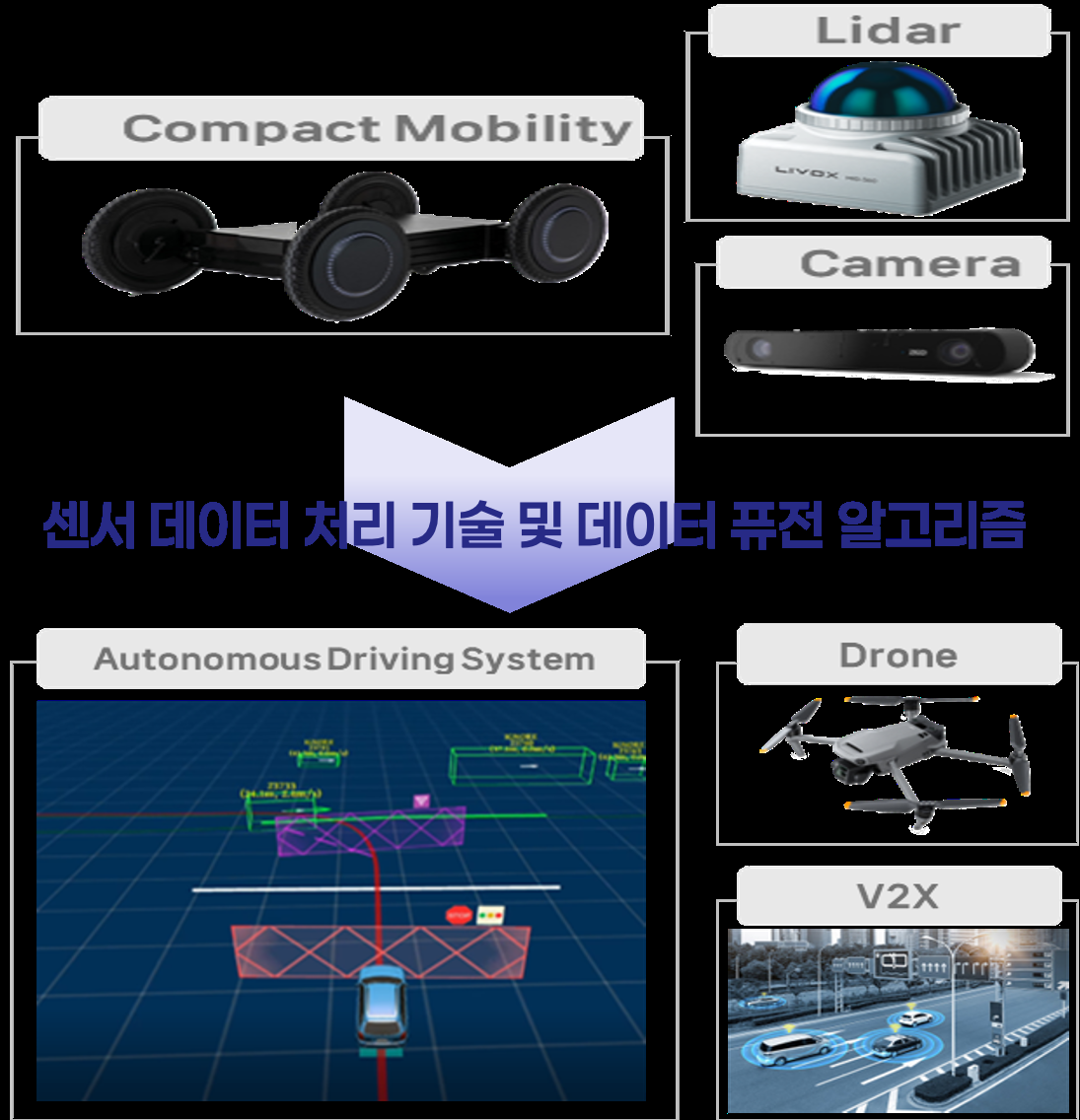
- Unmanned systems linking compact mobility and drones for accident diagnosis and facility-management decision support
- Mobility systems for disaster monitoring, including a remote-driving (tele-operation) framework and its operating environment
- Dynamic crowd simulation for evacuation strategy, built from unstructured data and experiment-based evacuation behaviour models
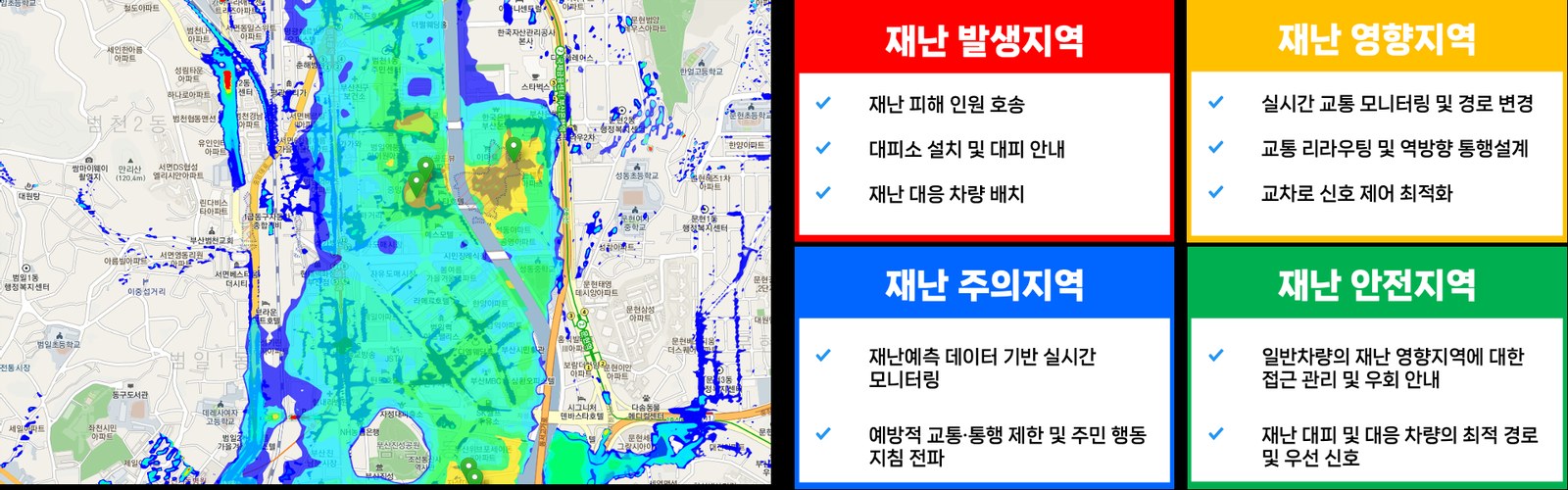
- Ground transport operation and management systems for disaster response
Where the groups meet
Three cross-group syntheses define the centre's core competitiveness.
- Automated maintenance of megastructures — Group 1's deformation prediction and risk analysis combined with Group 2's 3D-printed reinforcement, giving unmanned damage detection, reinforcement optimisation and automated repair
- Rapid recovery and evacuation — Group 3's accident-site scanning and damage assessment combined with Group 2's 3D printing, automating on-site reinforcement and clearing evacuation routes
- Optimal evacuation under disaster — Group 1's structural monitoring combined with Group 3's advanced mobility, running structural risk analysis into real-time route optimisation and drone- and vehicle-guided evacuation