Development of Virtual Environment and Demonstration Technology for Automated Driving based on Metaverse
메타버스 기반 자율주행 가상환경 및 실증 기술 개발
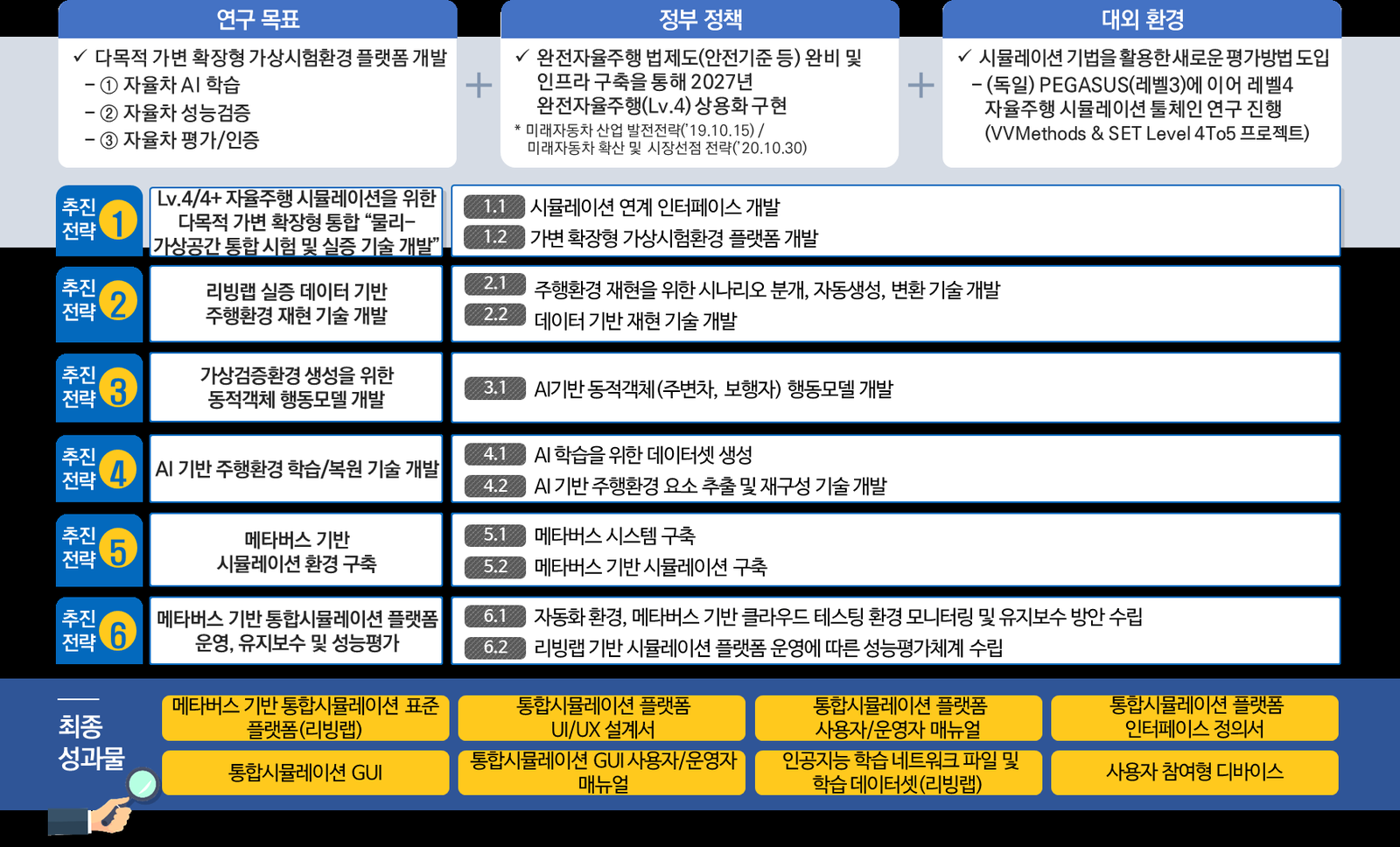
Part of MOLIT's autonomous-driving innovation programme, this project (April 2023 – December 2027) builds a multi-purpose, variably extensible virtual test environment for Lv.4/4+ automated driving that serves three uses at once: training AV AI, verifying AV performance, and evaluating and certifying AVs. KATRI, the Korea Automobile Testing & Research Institute, leads the consortium; KAIST joins as a co-research organisation alongside MORAI, Nota, NAVER LABS and other industry partners.
The problem it addresses is that simulation today is built for developers, not for the people who have to certify a vehicle: scenarios are limited, formats are proprietary, and living-lab demonstration cannot be rehearsed safely. The target is a standardised, modular, open platform running large-scale parallel tests on hybrid cloud, with Korean road content and living-lab data behind it.
Six research strategies
- A multi-purpose, variably extensible physical–virtual integrated test and demonstration platform for Lv.4/4+ simulation
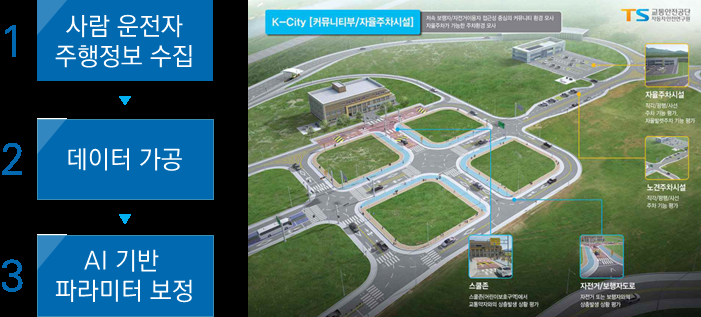
- Reproduction of the driving environment from living-lab demonstration data
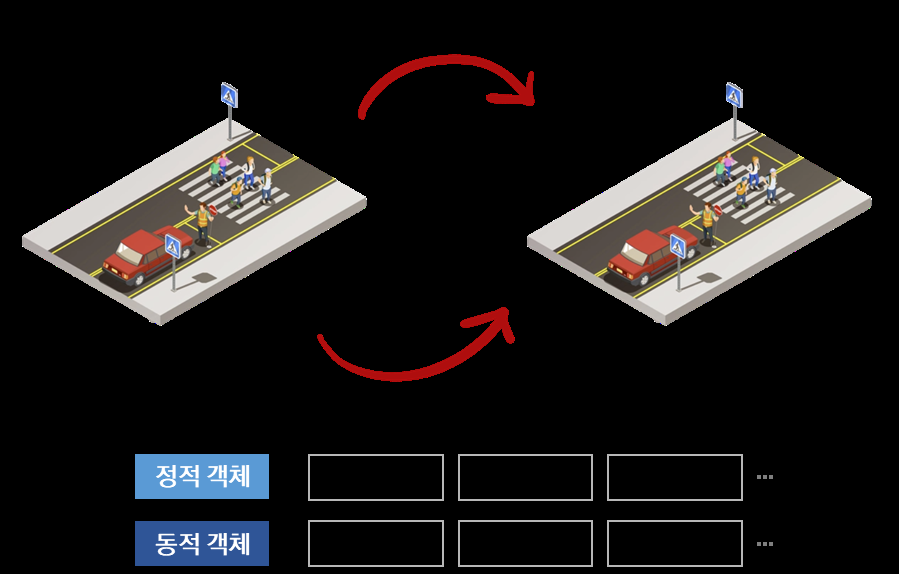
- Dynamic-object behaviour models for generating the virtual verification environment
- AI-based learning and reconstruction of the driving environment, including datasets for AV training
- A metaverse-based simulation environment on hybrid cloud and on-premise infrastructure
- Operation, maintenance and performance evaluation of the integrated simulation platform
KAIST's part
KAIST leads two of the project's research goals — the dynamic-object behaviour models, and the on-premise metaverse environment used for certification and evaluation.
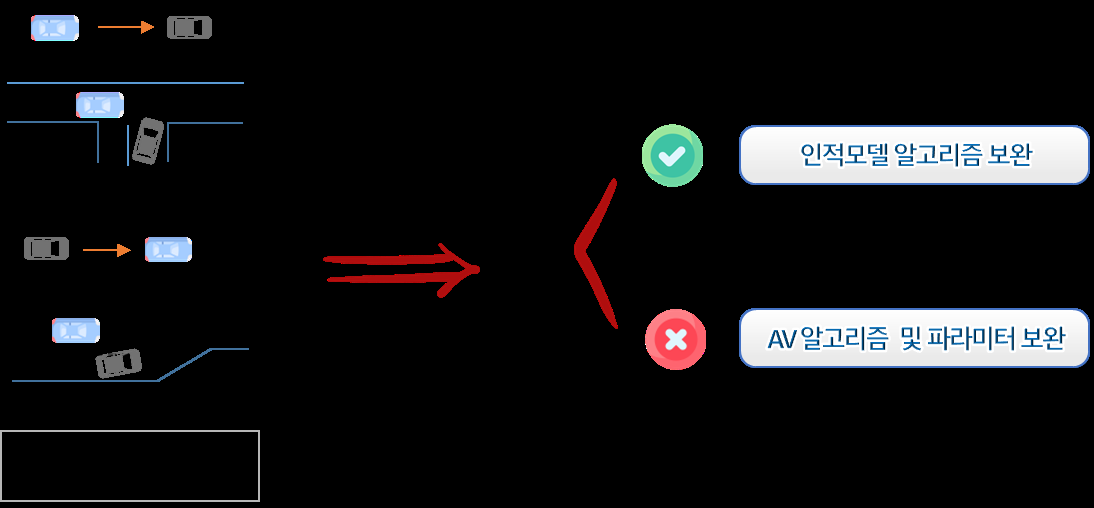
- AI- and parameter-based behaviour and decision models for dynamic objects (drivers and pedestrians): an initial simulation model, accuracy validation against collected data, driver-model refinement, and adversarial-condition dynamic models tuned on living-lab demonstration data
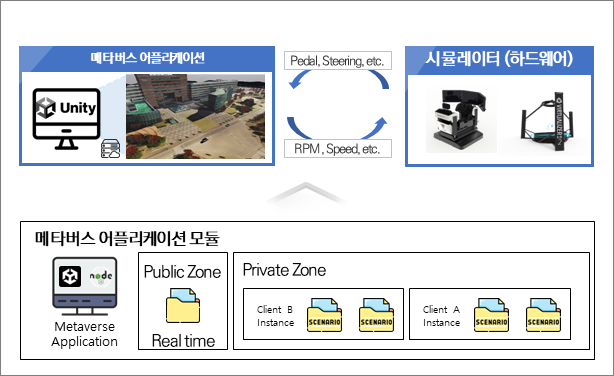
- An on-premise server-based metaverse environment for AV certification: living-lab data linkage, real-time replay with generative-AI-based automatic 3D object generation, multiplayer support, and a virtual road environment built for data collection